


Unlock the White House Watch newsletter for free
Your guide to what Trump’s second term means for Washington, business and the world
The writer is senior managing director of TRENDS US in Washington and an associate fellow at Chatham House
On September 29, President Donald Trump issued an executive order entitled “Assuring the Security of the State of Qatar,” which commits the US to the defence of Qatar in the event of an external attack against it.
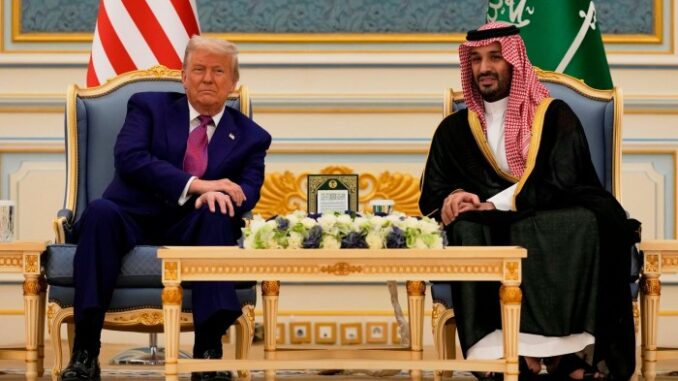
He is expected to offer the same to Saudi Arabia when he hosts Saudi Crown Prince Mohammed bin Salman at the White House on Tuesday. “There are discussions about signing something when the crown prince comes, but the details are in flux,” said a senior Trump administration official.
Trump is likely to repeat the mistake he made with Qatar. A defence deal that offers one-sided security assurances to any regional partner runs counter to America’s evolving security strategy for the Middle East, which seeks to reduce US military involvement in the region and promote greater regional security co-operation and integration.
Since the end of America’s war in Iraq in 2011, Washington has sought to do less in the Middle East and enable its regional partners to do more. Such an approach would free up US resources in the region to better address geopolitical priorities in Europe and the Indo-Pacific (Trump’s upcoming national defence strategy is expected to focus on the Western Hemisphere).
A unilateral defence pact with Riyadh, like the one with Doha, undermines America’s global strategy. That’s because it doesn’t obligate the Saudis to contribute more to collective security interests, particularly to the defence of US troops and assets in the region should they come under attack by Iran and its proxies.
Any defence pact should be mutual, but Saudi Arabia is not currently ready to support a mutual defence pact (nor is Qatar, for that matter). And it’s not even clear that Riyadh would want to, for understandable reasons.
Iran and its regional militia network are the primary threats against which the US would defend Saudi Arabia. But Prince Mohammed has reconsidered the value of confrontation with Tehran since his misadventure against the Iran-backed Houthis in Yemen. He wants calm in the region to attract foreign direct investments in the Saudi economy, which is why he normalised his country’s ties with Iran in 2023.
Trump is on a less peaceful path with Iran. In June, after a week of tit-for-tat Israeli and Iranian air strikes, he directly intervened in the conflict, attacking three Iranian nuclear sites with bunker-buster bombs. He then said he would “absolutely” consider bombing Iran again if intelligence concluded Iran could enrich uranium to concerning levels.
If that happens, Prince Mohammed will most likely stay on the sidelines and possibly publicly condemn US military action, as he has in the past. And even if his appetite for using force changes, the kingdom’s military capabilities are questionable. The Saudi campaign in Yemen revealed serious deficiencies in ground operations, intelligence, co-ordination and adaptability to unconventional warfare.
Trump shouldn’t commit to the defence of Saudi Arabia if the kingdom won’t do the same for America. For a president who has championed a less interventionist US foreign policy based on an “America First” approach, extending security assurances to another Middle Eastern country where conflict is a regular occurrence is a recipe for strategic overstretch.
This is not to say the US shouldn’t bolster security ties with Saudi Arabia and other Arab countries. Washington should continue to help its Arab partners develop their military capabilities and seek integration among themselves. But a one-sided deal, without a stronger US-Saudi defence relationship, is just political theatre. It lacks political credibility and military effectiveness — the backbones of successful defence pacts. Such a deal won’t advance any long-term US interests in the Middle East, or the kingdom’s security.


Be the first to comment