


Unlock the Editor’s Digest for free
Roula Khalaf, Editor of the FT, selects her favourite stories in this weekly newsletter.
This article is an on-site version of the Free Lunch newsletter. Premium subscribers can sign up here to get the newsletter delivered every Thursday and Sunday. Standard subscribers can upgrade to Premium here, or explore all FT newsletters
By most standards, Britain is a rich country. But it behaves as if it is wealthier, faster-growing and more influential than it actually is.

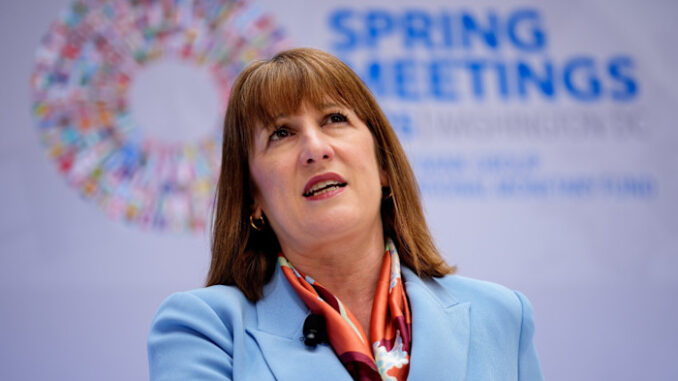
Take chancellor Rachel Reeves’ visit to the World Bank-IMF spring meetings earlier this month. She called on other nations to follow the UK’s lead in containing energy costs and touted the country as a “safe harbour economy” to woo war-weary expats from the Gulf. The ambition was laudable, but detached from reality.
As she arrived in Washington, the IMF cut Britain’s growth forecasts for 2026 by more than any other G7 nation, partly because of the country’s exposure to the oil and gas shock triggered by the Iran conflict. (Britain has among the highest industrial electricity prices in the developed world.) And, despite the war, hopes of a large-scale return of professionals from places such as Dubai are dim given the UK’s uncompetitive tax rates.
This isn’t the first time UK leaders have overstated the country’s abilities. Wherever one stands on the EU referendum, executing Brexit — the nation’s largest bureaucratic undertaking since the second world war — always seemed too big a challenge for the UK’s policymaking apparatus. And the broader notion that Britain could easily carve out winning trade deals outside the bloc overestimated the country’s economic leverage.
Similar delusions of grandeur extend to successive governments’ industrial strategies. UK politicians have wanted the country to be world-leading in everything, from steelmaking to cryptocurrency. This unfocused approach has unsurprisingly failed to raise the nation’s longstanding low rate of productivity growth.
Then there is the mismatch between what the country can deliver and public expectations. A frequent critique is that UK citizens want Scandinavian levels of welfare support and public services with the US’s low income tax rates. Labour has struggled to rein in benefit spending, amid pressure from backbench MPs. And few parties are willing to tackle the popular but lavish “triple lock”, a policy that guarantees the state pension rises in line with the highest of inflation, earnings growth or 2 per cent.
The upshot is a nation that spends well beyond its means. The debt-to-GDP ratio is set to hover above 95 per cent for the next few years, and could surge to around 275 per cent by the 2070s, according to the Office for Budget Responsibility. The UK spends almost twice as much on debt interest payments than on defence. (The government has, however, pledged to raise defence as a share of GDP.)

The left, in particular, thinks public demands can be endlessly paid for by employers, the capital-rich and high earners. But Britain’s private-sector competitiveness, like the national budget, is not a limitless resource.
The country’s small enterprises are squeezed by one of the rich world’s highest minimum wage rates. Britain’s taxes on wages for the average worker rose more than any other rich country last year, according to the OECD. Meanwhile, ambitious young professionals are increasingly looking abroad to avoid the UK’s steep marginal income tax rates.
The economic complacency extends to growth. The lobby against reviving Britain’s North Sea gas exploration remains strong, even though more drilling would raise much-needed revenue, rebuild fuel buffers and support the green transition. Some argue keeping gas in the ground casts the country as a net zero exemplar. But that, again, overplays the nation’s influence. Instead, the UK prefers to import gas from its neighbour on the basin, Norway.
The country has other costly virtues. Nimbys block housing developments, even on unprotected land. Environmentalists force infrastructure projects — including for green power — into expensive adaptations, delays or cancellations, sometimes based on excessive wildlife protections.

Finally, there is politics. For the past week, MPs have been focused on the mounting pressure facing Prime Minister Sir Keir Starmer, as revelations regarding his appointment of Lord Peter Mandelson as UK ambassador to the US continue to surface. Investors and business are baffled by how easily Westminster can get engrossed in such controversies, particularly amid global economic turbulence and lacklustre growth.
Britain cannot afford its penchant for drama and sacking prime ministers (particularly when there are few good alternatives). No UK leader has completed a full standard electoral term for more than a decade. Political instability has sapped investment, stymied reform and pushed government borrowing costs higher. And yet, it resurfaces time and again.
Until UK policymakers and the public realise their values and habits are better suited to a richer nation with the resources to absorb them, Britain will continue to drift. The sooner the country accepts its limits, the better chance it will have of regaining some influence.
Send your thoughts in the comments, to [email protected] or via X @tejparikh90.
Food for thought
As modern institutions face upheaval, this essay explores how universities have survived and evolved for almost a millennium.
Free Lunch on Sunday is edited by Harvey Nriapia
Recommended newsletters for you
The AI Shift — John Burn-Murdoch and Sarah O’Connor dive into how AI is transforming the world of work. Sign up here
Unhedged — Robert Armstrong dissects the most important market trends and discusses how Wall Street’s best minds respond to them. Sign up here


Be the first to comment