

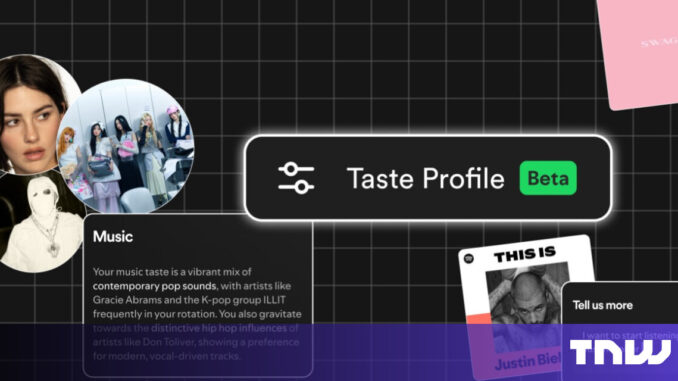

The feature, announced at SXSW by co-CEO Gustav Söderström, lets Premium listeners see and shape the data model powering their recommendations, starting with a beta rollout in New Zealand
For a decade, Spotify’s recommendation engine has worked largely in silence. It watched what you played, noted what you skipped, inferred meaning from the time of day and the tempo of your commute, and it never told you what it had concluded. On Friday, at SXSW in Austin, the company decided to change that.
Gustav Söderström, Spotify’s co-CEO, announced Taste Profile: a new feature that surfaces the algorithmic model the platform has been building about each listener, and crucially lets users modify it directly. The beta will begin rolling out to Premium subscribers in New Zealand in the coming weeks.
The premise is straightforward enough. Taste Profile aggregates a listener’s behaviour across music, podcasts, and audiobooks into a single view: the genres explored recently, the artists listened to most, the patterns that define a listening day.


The 💜 of EU tech
The latest rumblings from the EU tech scene, a story from our wise ol’ founder Boris, and some questionable AI art. It’s free, every week, in your inbox. Sign up now!
Where a user notices the profile is wrong, too heavy on music they played years ago, or missing a phase they have been quietly working through, they can flag it. They can ask for more of a particular vibe, or less. They can describe a current context, training for an event, commuting on weekdays, and the system will factor that in when deciding what to surface on the Spotify homepage.
“This is the next step in our vision to make personalization more transparent, responsive, and truly yours,” Söderström told the SXSW audience.
Spotify cited an internal figure that more than 80% of its listeners name personalisation as what they value most about the service. The claim, which the company has referenced in various forms since at least 2023, positions algorithmic curation not just as a feature but as the primary reason people stay.
The competitive logic behind Taste Profile follows directly from that: if personalisation is the product, giving users more control over it is a way to deepen their investment in it.
The announcement comes roughly two months after Spotify expanded Prompted Playlist, a separate but related feature that lets users generate playlists by describing what they want in natural language, from its initial New Zealand testing to Premium users in the US and Canada in late January 2026, and subsequently to subscribers in Australia, Ireland, Sweden, and the UK in February. The sequencing is deliberate.
Both features push the same underlying argument: that the future of streaming personalisation is collaborative, not passive.
Where Prompted Playlist is generative, it creates something new from a description, Taste Profile is corrective. It works with the model that already exists, giving users a chance to audit and adjust what years of listening have written about them.
Whether someone has been an accidental customer of the algorithm (playing whatever appeared on the homepage, not particularly caring) or has strong views about the direction their recommendations have taken, the feature is designed to accommodate both. “You can shape your Taste Profile as much as you’d like,” the company said in its announcement, “or leave it and enjoy Spotify as usual.”
The beta will start in New Zealand, a market Spotify has used repeatedly for early-stage testing of AI-adjacent features, including the initial Prompted Playlist launch. No timeline was given for a broader global rollout. Taste Profile will be available to Premium subscribers only; there was no indication of when, or whether, it might reach free-tier accounts.
Spotify is marking 2026 as its 20th anniversary year, and its SXSW presence this week has been calibrated accordingly, concerts, a headline session with Söderström, country artist Lainey Wilson, and podcast host David Friedberg.
The Taste Profile announcement landed on the last day of the company’s main SXSW programming, providing a product note to accompany the celebration.
What the feature represents, beyond its functionality, is a shift in how Spotify frames its relationship with listeners. The algorithm has always existed; the company is now making the case that knowing it is there, and having some say in what it does, is a feature in itself.


Be the first to comment